Stanford University
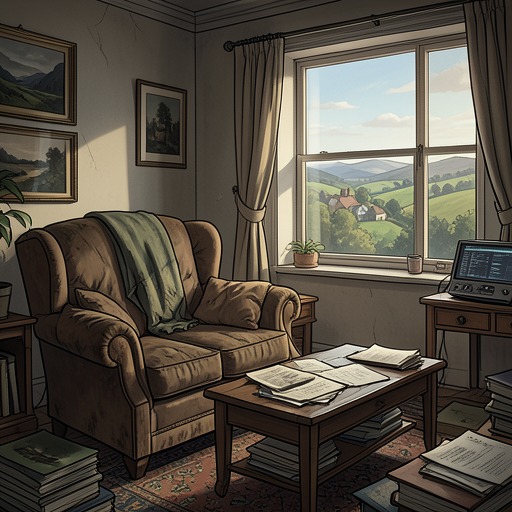
The HumansStanford University is the setting for the alien narrator’s attempt to build an ordinary life as Andrew Martin without allowing human mathematics to advance toward dangerous technological consequences. Its smiling students, busy quad, and sunlit surroundings stand in sharp contrast to his solitude and grief: Stanford is a happy place by its own campus measure, but for him it is also a landscape through which he moves like a ghost.
Arrival and a new life
After deciding to stay on Earth as Andrew Martin, the narrator first moves out of the Martin family home and rents a small flat in Cambridge. He then applies for jobs elsewhere in the world and eventually secures a teaching position at Stanford University in California. The move gives him distance from Isobel Martin and Gulliver, as well as a way to continue living without causing the scandal, missing-person inquiry, or funeral Isobel wants to avoid.
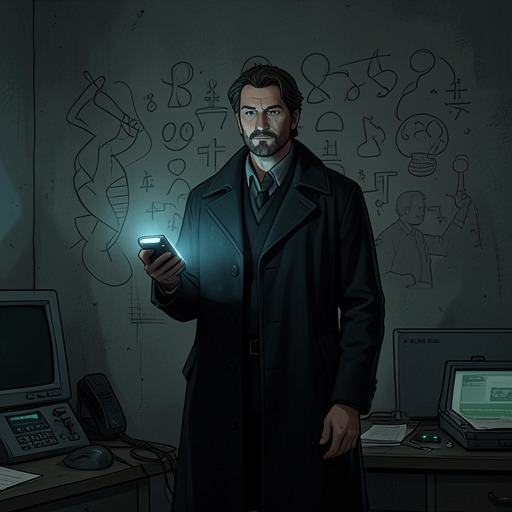
His new professional life is deliberately circumscribed. At Stanford, he performs well enough as a teacher but takes care not to advance mathematical understanding in ways that could produce a leap in technological progress. A poster of Albert Einstein on his office wall makes that restraint visible: alongside Einstein’s photograph is a warning comparing technological progress to an axe in the hands of a pathological animal. The image turns an abstract caution into part of the narrator’s everyday working environment.
The campus and its uneasy cheer
The narrator describes Stanford as a happy place. Students in red sweaters look smiling, tanned, and healthy despite spending their days in front of computer screens. Against this bustle, he walks through the quad like a ghost, breathing the warm air while feeling terrified by the scale of human ambition around him. The contrast is not simply between a lively campus and a solitary newcomer; the scene places his fear of what humanity might do with its knowledge inside a setting that appears confident and content.
He lives alone in a pleasant apartment in Palo Alto, which he fills with plants. The routines of campus life do not make him feel at home: he drinks white wine often enough to be unusual among people who seem not to get hangovers, and he dislikes frozen yoghurt, a food that appears to be a Stanford staple. These small social mismatches give his isolation ordinary, daily forms, even as his deeper estrangement comes from the life and identity he has left behind.
He tries to avoid making friends because he expects friendship to bring increasingly personal questions about his past, origins, and childhood. He does not want to lie about them. Students and fellow lecturers sometimes notice the scarred, purple skin of his hand, but do not press him for an explanation. Stanford thus offers him a measure of privacy, though not an uncomplicated one: visible evidence of his difference is present even when others refrain from asking about it.
Grief in music, books, and travel
The narrator buys music by Debussy, Ennio Morricone, the Beach Boys, and Al Greene, and watches Cinema Paradiso. He repeatedly plays the Talking Heads song “This Must Be the Place,” but the repetition sharpens rather than quiets his longing. It makes him melancholy and leaves him wanting to hear Isobel’s voice again or Gulliver’s footsteps on the stairs. Poetry has a similar effect, turning cultural and intellectual interests into reminders of the people from whom he is separated.
At the campus bookstore, he finds The Dark Ages, a book by Isobel Martin. He stands reading her words aloud for nearly half an hour. A passage about England’s violence after Viking raids and the events that culminate in Danish rule in 1013 holds him there; he presses the page to his face, imagining it as Isobel’s skin. The scene joins Stanford’s academic setting to an intimate act of longing: her published words are available to him, but the person he misses is not.
Work takes him to Paris, Boston, Rome, São Paulo, Berlin, Madrid, and Tokyo. He hopes that filling his mind with human faces will help him forget Isobel, but finds the opposite: attention to humanity as a whole intensifies his attachment to her in particular. He likens the effect to thinking about a cloud and thirsting for a raindrop. He therefore stops travelling and returns to Stanford, trying instead to lose himself in nature.
Nature, return, and the limits of progress
The evening drive becomes the highlight of his day. He often heads into the Santa Cruz Mountains and walks in Big Basin Redwoods State Park, where giant trees and the presence of jays, woodpeckers, chipmunks, raccoons, and sometimes a black-tailed deer draw his attention away from campus life. If he arrives early enough, he takes the steep path near Berry Creek Falls and listens to the rushing water, sometimes accompanied by the low croak of tree frogs. At other times he drives along Highway One to watch the sunset.
Sunsets, once merely the slowing and scattering of light to him, now hold him with their red, orange, and pink colours, sometimes marked by traces of violet. This change in perception makes Stanford’s surroundings more than a retreat from work: nature is among the experiences through which his life as a human alters what he can feel and notice.
That retreat does not end his involvement in the debate over progress. About two weeks after feeling drawn east toward England and wanting to see Isobel and Gulliver again, he is invited to Cambridge for lectures on mathematics and technology. His department head, Christos, encourages him to go. Staying in student accommodation at Corpus Christi College, he keeps a low profile, now bearded, tanned, and heavier, and delivers his lecture. Despite jeers, he argues that mathematics is dangerous territory and that humanity has explored it as fully as it should; further progress, he warns, would mean entering unknown peril. Stanford is therefore both the place where he puts this policy into practice and the professional base from which he carries its argument into public debate. His restraint is driven by concern that mathematical progress could bring destruction, and by the wish to ensure that no Vonnadorian would have reason to visit Earth.